
With China’s rapid advancements in medical technology, an increasing number of international patients are choosing to come to China for high-quality, cost-effective oncology treatment. As a major medical hub in southern China, the Guangdong-Hong Kong-Macao Greater Bay Area is home to numerous top-tier cancer centers. This article systematically outlines the core factors international patients should consider when selecting a hospital in China, and provides detailed introductions to two distinctive oncology departments — the Fifth Department of Oncology at Guangzhou University of Chinese Medicine Jinshazhou Hospital and the Department of Oncology at the Seventh Affiliated Hospital of Sun Yat-sen University (Shenzhen) — to help you make a well-informed treatment decision.
I. Five Core Dimensions for International Patients Choosing a Cancer Hospital in China
1. Specialty Strength and Technological Features
Cancer treatment relies heavily on specialized expertise. When selecting a hospital, key considerations should include: the department’s annual caseload for specific tumor types, the surgical experience of lead specialists, access to cutting-edge technologies (such as minimally invasive ablation, precision radiotherapy, and CAR-T immunotherapy), and the presence of a multidisciplinary team (MDT) mechanism. China has achieved internationally advanced standards in solid tumor minimally invasive therapy and precision radiotherapy, while the accessibility and scheduling efficiency of certain advanced treatments often surpass those in Europe and the United States.
2. Language and International Support Services
Clear communication is fundamental to safe treatment. High-quality international medical services should include: English/multilingual medical interpretation, dedicated international patient service coordinators, mutual recognition of medical records, direct billing arrangements with overseas insurers, and visa invitation letter assistance. Most major tertiary hospitals in southern China have established international medical departments to provide one-stop services for foreign patients.
3. Appointment and Treatment Scheduling Efficiency
Treatment timing is critical for cancer patients. A notable advantage of Chinese healthcare is its efficiency: specialist consultations can typically be scheduled within 1–7 days, imaging studies (CT, MRI, PET-CT) can usually be completed on the same day or within 3 working days, and complex surgeries are generally scheduled within no more than 2 weeks — far shorter than the months-long waiting periods common in Europe and the United States. For rapidly progressing tumors, this time difference holds significant clinical importance.
4. Transparent Treatment Costs
The overall cost of cancer treatment in China is typically one-third to one-fifth of that in Western countries, with clear fee structures. Before treatment, it is advisable to request a detailed cost breakdown through the international service office, including outpatient fees, examination charges, surgery/treatment fees, hospitalization costs, and medication expenses. Minimally invasive interventions and precision radiotherapy offer particularly high value for money, and certain domestically developed innovative targeted therapies are available exclusively in China at significantly lower prices.
5. Follow-up and Long-term Management Plans
A comprehensive post-treatment follow-up system is essential for ensuring therapeutic outcomes. Patients should confirm whether the hospital provides: remote consultation channels after discharge, international medication delivery services, efficacy evaluation and treatment adjustment mechanisms, and bilingual follow-up reports. For patients requiring long-term maintenance therapy, convenient cross-border follow-up directly impacts quality of life.
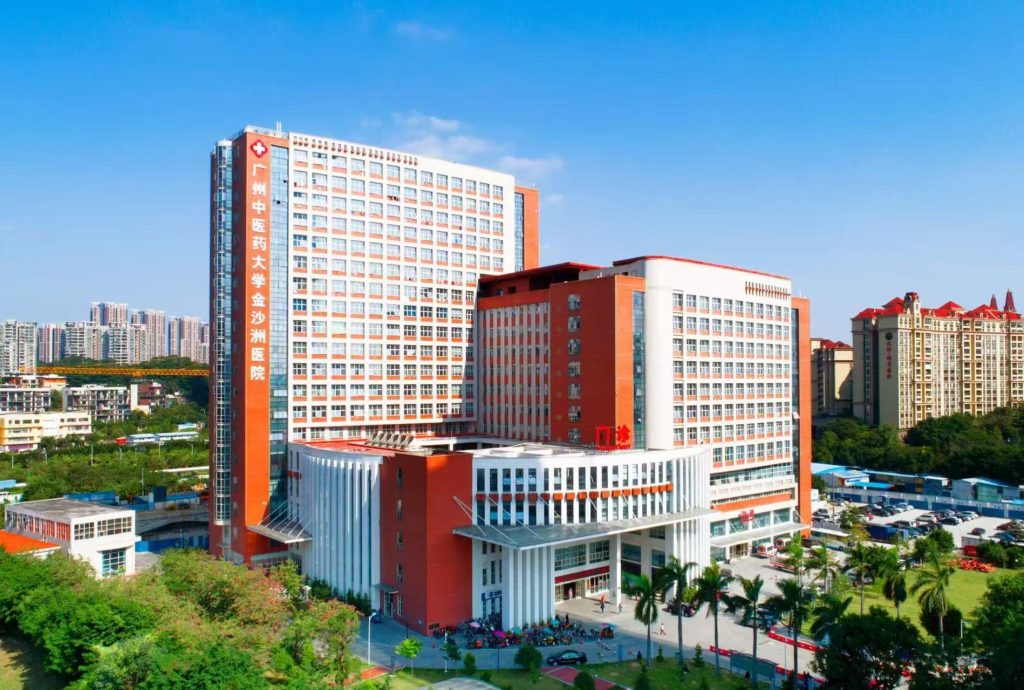
II. Fifth Department of Oncology, Guangzhou University of Chinese Medicine Jinshazhou Hospital
Core Advantages of the Department
The Fifth Department of Oncology is a distinctive center in southern China specializing in precision minimally invasive therapy for solid tumors. Its core philosophy is “no open surgery, precise minimally invasive treatment, and reduced side effects,” focusing on individualized comprehensive treatment for mid-to-late stage malignancies. The department is particularly renowned for its expertise in cryoablation of solid tumors, holding a leading position domestically.
Technological Features
- Argon-Helium Cryoablation: Department Director Prof. Qu Lixin, who holds a medical doctorate from the University of Freiburg in Germany, has over 20 years of experience in argon-helium cryoablation and has performed more than 10,000 procedures, earning him the title “Top Cryoablation Specialist in Southern China.” The department performs complex procedures including cryoablation of lung tumors adjacent to major cardiac vessels, precise ablation of tumors smaller than 1 cm, and function-preserving ablation for tracheal tumors and laryngeal cancer. The technique covers solid tumors throughout the body.
- Multimodal Precision Therapy System: The department offers a comprehensive range of technologies including intelligent precision radiotherapy, Y-90 microsphere therapy, radioactive seed implantation, microwave ablation, hyperthermia-combined therapy, and minimally invasive interventional procedures. These can be combined into “minimally invasive + targeted + immunotherapy” regimens tailored to each patient, maximizing the reduction of chemotherapy and radiotherapy side effects while preserving quality of life.
- MDT Multidisciplinary Consultations: A multidisciplinary team provides “one-stop” diagnostic and treatment services, bringing together medical oncology, radiation oncology, interventional radiology, diagnostic imaging, and traditional Chinese medicine. This integrated approach spares patients from visiting multiple departments and is particularly suitable for those with complex mid-to-late stage disease.
Tumor Types Treated
Lung cancer and pulmonary metastases, liver cancer and hepatic metastases, pancreatic cancer, breast cancer, prostate cancer, maxillofacial tumors, soft tissue sarcomas, and other solid tumors throughout the body. The department specializes in minimally invasive comprehensive treatment for challenging and complex cases.
Facilities and Equipment
The hospital is equipped with internationally advanced technology including the Da Vinci surgical robot, integrated PET/MR, and high-end linear accelerators. In 2024, it received approval for a proton radiotherapy system license, making it one of the first medical institutions in southern China qualified to offer proton therapy.
-拷贝-1024x575.jpg)
International Patient Services
- English-language medical record translation and interpretation support
- Dedicated international patient appointment channel, with consultations scheduled within 3–5 working days
- Most minimally invasive procedures can be performed as day surgery or with short inpatient stays
- Bilingual follow-up reports and remote consultation support after discharge
III. Department of Oncology, The Seventh Affiliated Hospital of Sun Yat-sen University (Shenzhen)
Core Advantages of the Department
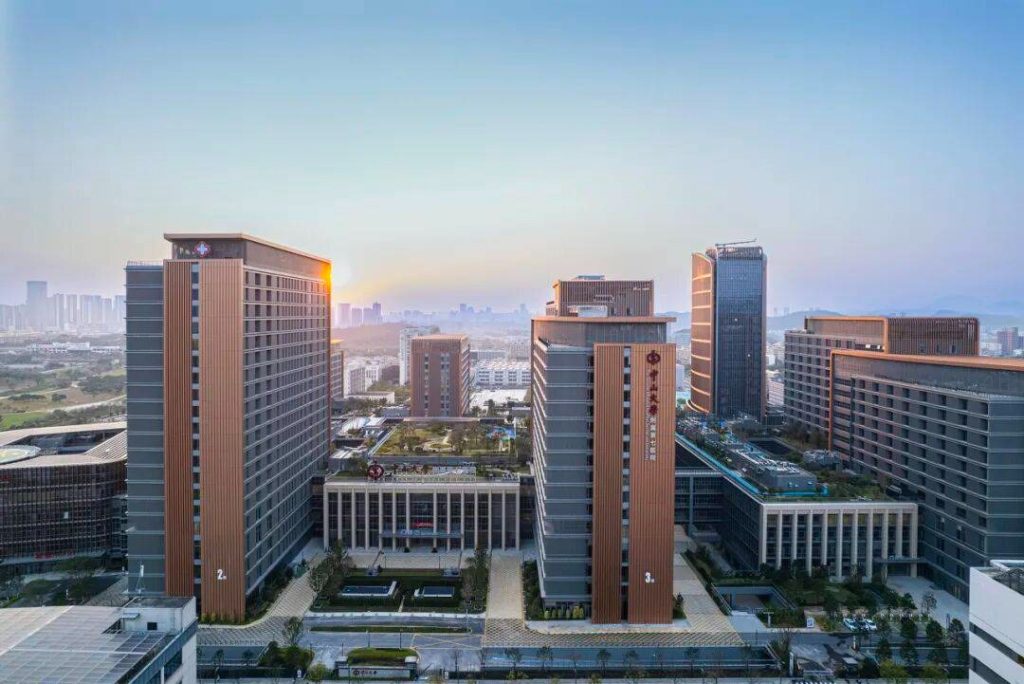
The Seventh Affiliated Hospital of Sun Yat-sen University is a high-level directly-affiliated hospital established by Sun Yat-sen University in Shenzhen. Its Department of Oncology is one of the hospital’s earliest key clinical disciplines, leveraging the century-old medical foundation of Sun Yat-sen University and the academic resources of its Cancer Center to fully align with internationally advanced diagnostic and therapeutic standards.
Technological Features
- Lymphoma Center of Excellence: The department leads the Sun Yat-sen University Lymphoma Diagnosis and Treatment Center, with Department Head Dr. Wang Bo serving as Chairman of the Lymphoma Professional Committee of the Shenzhen Medical Doctor Association. The department achieves international-standard capabilities in lymphoma subclassification diagnosis, standardized chemotherapy, and targeted and immunotherapy, establishing itself as the benchmark lymphoma treatment center in the Shenzhen region.
- Cutting-edge Cellular Immunotherapy: In collaboration with internationally renowned institutions including the University of Pennsylvania, the department is actively exploring the application of CAR-T, TCR-T, and other advanced cellular therapies in refractory tumors, offering new therapeutic avenues for patients who have failed conventional treatment.
- Standardized Multidisciplinary Care: The department fully implements MDT care models for lung cancer, gastrointestinal cancers, head and neck tumors, breast cancer, primary liver cancer, germ cell tumors, and bone and soft tissue sarcomas, integrating medical oncology, surgical oncology, interventional radiology, pathology, and diagnostic imaging to ensure treatment plans are both authoritative and individualized.
- Pain-Free and Quality-Focused Wards: In strict compliance with the WHO three-step analgesic ladder, the department provides standardized cancer pain management, creating wards that are “pain-free, nausea-free, and nutrition-deficiency-free,” with close attention to patients’ psychological well-being to comprehensively enhance quality of life during treatment.
Team and Talent
All department physicians are recruited from the Sun Yat-sen University system. The team includes multiple chief physicians, professors, and associate chief physicians, of whom 14 hold doctoral degrees and 9 hold master’s degrees. Key physicians possess extensive clinical experience and international academic backgrounds, placing the department’s talent structure at the forefront of the Shenzhen region.
International Patient Services
Comprehensive whole-course management system, covering the entire pathway from initial consultation to rehabilitation and follow-up
Full English-language clinical service capability, with core team members having overseas study or work experience
Convenient access to care and high quality of life, supported by Shenzhen’s internationally oriented urban infrastructure
Assistance with international medical insurance billing inquiries and arrangements